AI helped us win a bike race (except for the hard parts)
My son and I took first and second at a Utah road race with a strategy built with AI, and I used the same approach to win a state title. Here's what AI did, what it couldn't do, and why that line matters for every team using it.
By Paul Hepworth, author of The Compounding Team
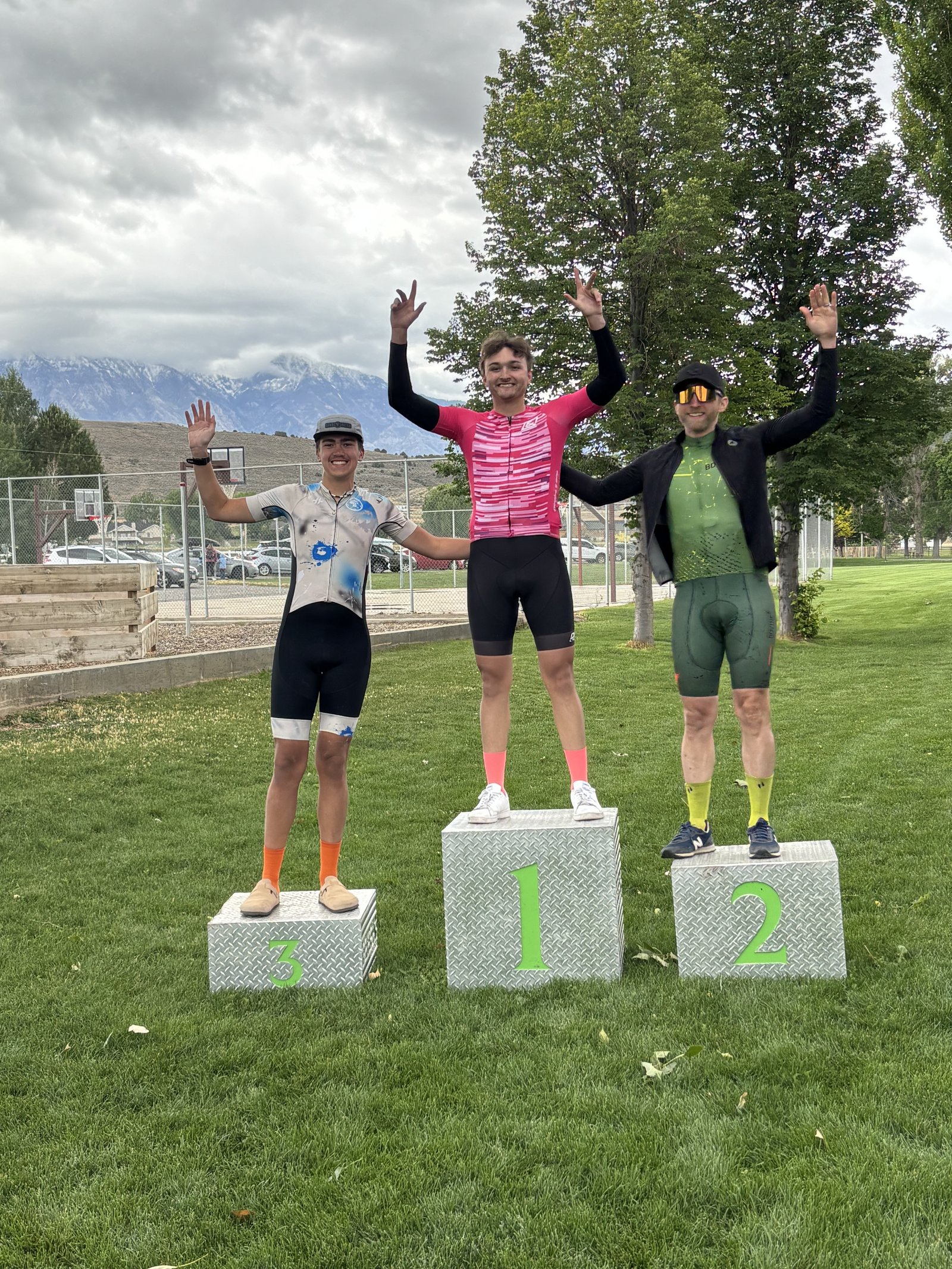
AI helped my son and me win a bike race.
Except for the training. The sleep. The practice. And every decision we made in a race where anything could happen.
The race
Last spring, my son and I raced the West Mountain Road Race, an amateur USA Cycling road race in Utah. We'd trained for it, and we wanted more than a good day. I wanted my son to win, and I wanted to be on the podium with him.
So before race day, I did something I hadn't done before. I asked AI to help us plan it.
What I gave the AI
- Our race history. My results and my son's, so it could understand what each of us is good at.
- Everyone else's race history. I looked up the riders who had registered, so it could understand their strengths and backgrounds too.
- The race brochure. The route, the climbs, the details of the course.
Then I asked it a simple question: What strategy gives my son the best chance to win, and me the best chance to podium with him?
The plan
The answer was clear, and it matched what we each do best:
- I'd do the work. Attack on the climbs, wear the group down, and protect my son.
- He'd save it for the end. Stay sheltered, stay fresh, and finish strong.
It also told us who to watch: the strongest rider in the field, and a couple of riders it suspected were on the same team and would likely work together.
Race day
The plan held up. The rider it flagged as the top threat crashed out, which was rough for him. All race long I kept an eye on the riders it had warned us about. I attacked where the plan said to, blew the group apart on the climbs, and wore people down so my son could finish strong.
My son took first. I took second.
It wasn't a one-off
A few weeks later, I did it again for the Utah state criterium championship in my masters age group. This time I used AI to build a plan to beat the reigning Utah state road race champion.
It worked. I'm now the reigning Utah state crit champion for my age group.
Same approach: know exactly what you want, give AI the right information, then go do the work.
What AI didn't do
AI didn't pedal for us. Not yet.
It didn't get up early to train. It didn't get us to bed on time the night before. It didn't decide, mid-race, when the plan needed to bend because the race wasn't going exactly as expected. And it couldn't make us follow through when our legs were burning.
What it did do was shrink the role of luck. It took information we couldn't easily process ourselves and turned it into a plan we could execute. If we executed it well, it gave us the best possible chance.
Why this matters at work
There's a lot of debate right now about AI. Does it take the fun out of things? Is it cheating? Does it actually work in the real world?
My experience is that AI is most powerful when you bring three things it can't:
- Know what you want. "Win" wasn't enough. "My son wins, and I podium with him" gave the AI something to plan around.
- Know how you'll measure it. We knew exactly what success looked like before the race started.
- Commit to following through. The best plan is worthless if nobody executes it when things get hard.
The same is true for teams. It's easy to say "just use AI." But the teams that get the most from it are the ones that are clear on the outcome, measure what matters, and do the work.
AI can give you a better plan. Winning is still up to you.
If something is holding your team back, whether it's AI or anything else, send it to me. Every week I answer one.
Questions
- How did you use AI to plan a bike race?
- I gave it three things: our own race history, the race history of everyone registered, and the race brochure with the route. Then I asked what strategy would give my son the best chance to win and me the best chance to podium with him. It came back with roles for each of us, where to attack, and which riders to watch.
- Isn't using AI for race strategy cheating?
- Racers have always studied the course, the results, and the competition. AI just did that homework faster and more thoroughly. It didn't ride the bike, make the split-second calls, or do the training. That part was still on us.
- What does a bike race have to do with AI at work?
- The same line applies. AI can shrink the role of luck by turning information you can't easily process into a plan. It can't decide what you want, how you'll measure it, or whether your team follows through. Teams that get the most from AI are clear on those three things first.
What's holding your team back?
Send me your situation. Every week I answer one: what's usually behind it, and one first move. Anonymous is fine.
Send yours →